Showing posts with label Electricity. Show all posts

Wednesday, 22 May 2013

What is the Difference Between a Variable and Fixed Electricity Plan?


The implementation of energy deregulation in several states such as Texas not only provided the people the power to select their Retail Electric Provider or the Texas electric company that services and facilitates their supply of electricity, but it also provided them the option to choose their preferred choice of electricity plans. Consumers living in areas with a deregulated electric market can select between a variable and a fixed rate plan.
The atmosphere of competition that energy deregulation has provided the Texas electricity market prompted Retail Electric Providers to come up with various payment schemes and payment rate plans that would suit the lifestyle, need or capacity of the consumer. For consumers, finding the right electricity plan that would suit their needs can be a very daunting task. Making a wrong decision would have considerable repercussions on their electricity bills and may go wary from what they have planned or preferred.
The following provides a brief overview to explain the differences and mechanisms behind fixed and variable rate payment plans. It would be wise for the consumer to check the merits of each so they could eventually make the best decision for them and their household.
What is a Fixed Electricity Plan?
The term "fixed" means something that is constant or unchanging and in terms of electricity plans, a fixed-rate plan means the rates are locked or fixed for a certain period (eg. 6 months, 12 months, 24 months, etc) as agreed upon by the consumer and the Texas electric retail provider. The agreement is bound by a contract between these two parties, and the consumers are guaranteed to pay only the same rate per KWh of electricity usage.
Consumers under this plan will get the benefit of a fixed rate even if the energy market wholesale price fluctuates. However should market prices drop below the agreed fixed rates, consumers are required to pay the guaranteed price as stipulated in their contracts. Other Retail Electric Providers offer a balanced or levelized payment scheme for their users who are not delinquent on their payments, wherein the customers can pay a levelized amount calculated from their electricity usage for a certain period such as twelve months or more.
What is a Variable Electricity Plan?
The opposite of a fixed rate plan is the variable or month-to-month payment scheme wherein the Texas electric company bills consumers based on the current conditions or pricing trends of the energy market. This could be advantageous to users should there be a lowering of energy prices in the market. However, if the fluctuations in the prices result to higher rates, the consumers have no choice but to pay their Texas electricity bills based on these fluctuations.
How to Choose between Variable and Fixed Electricity Plan
The following is a short guide to aide consumers on what Texas electricity plan they would choose for their energy needs.
* Users who would not want to be burdened of fluctuating energy prices can choose to select a fixed rate for a certain period of time. Before the contract period will expire, the Texas electric retail provider will contact the consumer on whether to continue with the same plan for the next period.
* Consumers who are aware that they would be staying in their current abode for a short period of time or currently under a short term lease would do well in choosing a variable electricity plan as they will not be constrained or tied up by a fixed payment contract.
* Those that prefer to have the freedom to switch Texas electric companies or their payment plans without having to pay an early termination fee could opt to use a month-to-month plan. Regulations however, stipulate that people under a fixed-rate contract are not required to pay a pre-termination fee if the reason for their termination is to relocate to another city or state not covered by the Retail Electric Provider and not to switch to another provider.
* Choose Retail Electric Providers that offer special incentives or giveaways for consumers who pay regularly and are not delinquent on their Texas electricity bill payments. These giveaways of incentives can vary from free movie tickets to paid trips to pre-determined destinations depending on what the Retail Electric Providers offer subscribers.

Electrical Materials - Choosing Electrical Connectors


Electrical Material represents the parts or the elements that are used in order to make each and every electrical structure from a house circuit to a big factory. Electrical Materials can be the electrical fittings, the lugs, electrical circuit breakers, the motor control, the electrical conduit, the lighting or the enclosures.
The Electrical Material contains all the time movable electric charges. In the electrical metallic conductors, like the copper or aluminum ones, the movable electric charged particles represent the electrons. The positive movable electric charges are in the form of atoms. All the electric conductors are containing movable electric charges that will move in case that a potential difference is applied in separate points on the electrical material. This flow of electric charge represents the electric current. In most of the materials, the actual rate of the current is direct proportional to the voltage, provides the temperature to remain constant, in order that the electric material doesn't changes it's shapes and sizes.


The most known electrical conductors are the metallic ones; copper is the most common used material for all the wiring. Silver is the best conductors, but is also very expensive, and the gold as electric material is very good for the high quality surface-to-surface electrical contacts. There are also many conductors that are not metallic, such as graphite, solutions of salts and all the plasmas. All these electrical materials will offer some resistance and also some warm up when an electrical current will flow through them. The design of any electrical conductor is taking into consideration the temperature that the conductor will need to be able to endure without any damage, as well as the actual quantity of the electrical current that will flow.
The thermal and the electric conductivity will often go together (for example, many metals can be both electrical and thermal conductors). However, many materials can be electrical conductors without having good thermal proprieties.
In most of the countries from around the world, the electrical conductors are measured by the cross section in square millimeters. However, in the United States, the conductors are measured by the American Standard Wire Gauge for the smaller ones and by the Circular Mils for the larger ones.


The voltage on an electric conductor is mostly determined by the whole connected circuit, and not by the connector, itself. The electrical conductors are surrounded, or even supported, by the insulators, and only the insulation can determine the maximum voltage that can, and will be applied to any electrical conductor.

Saturday, 18 May 2013

Electrical Safety Training - Best Electrical Safety Tips For Your Home


Every home has electricity flowing through it and normally safe however, if you have young children or are planning to do work on you home, you must make sure you have some basic electrical safety training and electrical safety rules. Electricity is a part of modern society however without the proper precautions electricity can kill very easily. This article will give you some very basic electrical safety tips.

Small children love to learn by exploring and touching. Parents and caregivers must diligently remove any electrical hazards in their home and keep their children safe. First remove or repair any loose electrical lines. If you have loose electrical sockets or frayed wires protruding from the wall, you should have the issues fixed by a trained electrician. You can easily find one on the Internet. Also, replace any frayed power cords on electrical appliances you use. In some cases you can have a frayed power cord repaired but you should also consider replacing the appliance completely.
After any electrical wiring issues in your home have been repaired, take some time to learn about electricity and what to do in the case of an emergency. When there are small children in your home you must know what to do in the case of an electrical emergency. Purchase a training DVD that will explain electrical safety in an easy to understand detail. If learning from a DVD is not for you, some communities offer electrical safety training for free through the electrical power company. The goal of learning about electrical safety is to not become an expert in electricity or electrical repair but to gain enough knowledge to be able to react in an emergency.
Now that you have training and the most pressing electrical hazards in your house resolved. Start childproofing your home. Cover all electrical sockets with plastic electrical socket covers to prevent your child from poking items into the sockets. Be sure that the covers you choose to use cannot be removed easily by your children and are large enough that they are not a choking hazard.
Finally, prepare for the possibility of an electrical fire by purchasing a fire extinguisher specially designed for electrical fires. Water should never be used on an electrical fire because the water has the potential to cause the fire to spread. Knowing about electrical safety means being prepared for the possibility of an electrical fire by purchasing a chemical fire extinguisher and checking the charge on your extinguisher yearly.

While chances are you will never need to use your electrical safety training or use your fire extinguisher the knowledge of electrical safety tips in the home is vital to protecting your children. Take the time to take electricity and electrical safety rule serious and your house will be happy and healthy for years to come.


Sunday, 12 May 2013

Generating Electricity at Home - Magnetic Power Generators


Wouldn't you like to drastically reduce your power bills by generating electricity at home? If so, you are ready to make and install your own home magnetic power generation system. Wind, solar, and water generated power rely on external resources, but magnetic power generation is not like this. This is a system that does not rely on any outside forces to make electricity. You will be making electricity 24/7 all year and become your own utility company. Your goal of being energy independent and live off grid is easily achievable, and here I will present helpful steps for you to reach this goal.
Generating Electricity with Magnetic Power?
Steam, water, wind, or gas are commonly used to turn an electrical generator. But with a magnetic power generator, magnetic forces are used instead. With solar energy there is only about five hours per day of useful sunlight, and the panels will not work on foggy days or at night. A reliable flow of wind is required when using wind energy which can be quite unreliable. Wind turbines also require the use of a dump load to protect the blades from over spinning. With magnetic energy you have a system that is it's own source of energy, and produces electricity safely, reliably, and self-perpetuating.
Magnetic Power Generation, How Does It Work?
Like polls of two magnets will repel one another, and as kids, I think most of us remember this. You can feel this force, and as a kid you were probably amazed by this. With a magnetic system we are harnessing the internal force of the magnets to generate electricity. A propulsive force is created by the magnets to turn the generator shaft and make electricity. This can continue indefinitely so that it may be thought of as a perpetual motion machine. You can provide all of the free electricity you want at home by making one of these devices yourself. It is very simple to make one of these devices using materials commonly found at most any hardware store. These devices are simple to use, safe, and extremely efficient.
What Equipment is Needed for a Home Magnetic Power System?
A magnetic power system for home use will require many of the same components that are used for solar and wind systems. The first component needed is a charge controller so that the batteries are protected from over charging. Next, you will need deep cycle DC batteries. These types of batteries are designed to discharge over a long period of time and recharge quickly, and are ideal for magnetic power. Lastly, a power inverter is used to convert DC volts to AC so it can be used in your home power system. Your magnetic power generator is ready to be used once all these pieces of equipment are tied together. Keep reading to learn more on how you can enjoy free electricity forever.

Monday, 6 May 2013

Solar Energy to Generate Electricity at Home


There are many Renewable Energy Sources which are being used to generate electricity. Solar, wind, ocean, hydrogen are few forms of renewable energy sources which has high potential to generate electricity. Among all these alternative sources, Solar is among the most preferred form of renewable energy being used to produce electricity at home. The reason is quite simple, Earth receives abundant solar energy which can be converted into electricity by using solar panels which only requires one time installation.

We are seeing a tremendous growth in solar panel technology. Solar power panels are becoming more and more efficient, less costly and are coming with many incentives. Many countries have installed Solar Power Plants producing megawatts of power daily. Solar energy is very effective and green way of generating electricity.
Nowadays, cost of electricity and global warming is increasing while fossil fuels are decreasing. It's completely certain that cost of electricity is going to rise further as fossil fuel resources are diminishing. Many people are taking actions to become immune of any further electricity price hike. Their actions has also help them reduce their carbon footprint.
The best way to overcome your electricity problems is to generate your required electricity at home. We already have technologies that can produce electricity using renewable sources, you only need to take the decision. The most preferred and commonly used method to generate electricity at home is by employing solar panels on roof to harness solar energy. You can easily generate over 500 watts of electricity daily using solar power panels. This is over 50% of your electricity requirement for a day. More solar panels used, more electricity will be generated.
So here's what do you need to Generate Electricity at Home using Solar Panels?
1. Solar Panels
Buying solar panels can be sometimes tricky and will require you to do some math before buying them with certain ratings. Before moving on to math, you should have a clear understanding of types of solar power panel(s) you wish to use. You can either buy a solar power panel from a merchant, manufacturer which may cause you over $300 for 1 panel, or you can try DIY approach which might just cause you below $150.
Once you decide your approach for solar power panels, you should put your attention in analyzing the desired output from them. If your daily consumption is 1 KW and wish to generate 50% of electricity at home using solar panels, then you will require combination of 2-4 Solar power panels that can collectively produce 500 watts of power.
Thus buying solar power panels with suitable ratings is extremely important.

2. Installation guide
You will need a detailed installation guide that shows the exact installation steps both in pdf and video. Depending upon the approach for solar power panels you take, you will need the appropriate guide.
DIY guides may cost you around $50 while installation guides for manufactured solar power panels will cost around $20.
Solar energy is the best way to generate electricity at home. It only has initial cost of installation which will be recovered in a short time.


Wednesday, 1 May 2013

Let's Take a Look at How Electricity is Produced


Could you imagine life on earth without electricity. I think not, apart from our basic needs to survive such as food, water and air, life without electricity would be a nightmare. This article gives just a basic outline of electricity and how it can be produced.
We already know that lightning is electricity, also the friction between two materials produces what we call static electricity.
Kinetic energy is produced when we use a magnet with a piece of copper wire which then converts to electricity. Energy is produced in many kinds of ways by using, non-renewable sources of energy and renewable sources of energy, such as, wind power, solar energy, hydro-power, atomic and of course coal.
Coal

This is a non-renewable source of energy which is found in the mines. By heating the water using the coal this converts into a water vapor. Big pipelines transfer the water vapor into a turbine which will activate a magnet inside the generator, finally sending it off to huge power transmitters as high voltage. This transmitter will then convert this static current into direct current which is the energy we use in our homes. After this method has completed the vapors are cooled and then converted back to water which they reuse.
This form of electricity will one day be exhausted, as we know coal is a non-renewable source of energy which means that before too long we will be unable to depend on coal as a method to produce energy.
Atomic Power

Substances such as uranium are set off in huge atomic power stations where huge atomic reactions are caused. With incredibly high temperatures, radiation is created. This form of energy production in these power plants can be very dangerous. Atomic power is still used in many countries, such as France but for the majority of us this is certainly not the answer to grid power.
Hydro-Power

Since we have an unlimited supply of water this method is a renewable source of energy. Huge dams collect the water from canals, lakes and rivers. The water falls from the dam onto water turbines which starts the rotation. With the height and speed of the water falling, the turning of the turbine is what produces what we call a direct current. Which again can be used to supply energy for our homes, because of the huge amounts of water available this system is a very accepted way to produce electricity.
Solar Energy

Solar energy would have to be the ultimate way to produce electricity. The energy from the sun is also a renewable source of energy, we certainly don't have any worries about running out of it. Solar panels are usually the best way to convert this kind of energy, with smaller solar cells that absorb the sun's rays and then convert to electricity ready for use around the home. There a many homes today that are already using solar water panels to heat their water, including myself. I actually live on an island in the pacific where the majority of the homes here are all on solar hot water and currently in the process of changing over to solar energy. My god, we even have cars here that run on solar energy.
Wind Power

There are countries around the world that are using windmills to create electricity to power entire towns. When the force of the wind rotates the windmill (also referred to as wind turbine or wind generator) and with the power generated from this, it is then converted into ready to use energy.


Electricity - How it Came to Be


Electricity and water are the two main things that the majority of the world's population take for granted. With the flick of a switch we are able to power anything from the humble light bulb to an entire city. However, less than 90 years ago no more than 10% of British households had electricity in their homes. So what exactly is it that has made it possible to power billions of households across the globe?

To begin with it's important to note that electricity was never really "discovered", but harnessed. Electricity has existed since the dawn of time; in nature for instance we see it in the form of bolts of lightening that light up our skies or the small static shocks we get from time to time.
Many consider Benjamin Franklin to have been the one that "discovered" electricity as far back as 1752; this is not the whole truth though. Instead he paved the way for other great scientist of the time to study this new and exciting technology further.
The following 50 years was a frustrating time for scientist across the globe as they knew of electricity, but had no dependable source of it with which to conduct experiments. This all changed though in 1800 when the Italian scientist Alessandro Volta made a major breakthrough. Volta discovered that placing a piece of salt paper in between sheets of zinc and copper created an electrical current.
Volta had created the first ever electrical cell, which was strung together to create a battery; in honour of this a battery's power is measured in "Volts". From this point forward scientists had a dependable form of electricity which they could study further, the second major breakthrough.

Around the same time, Michael Faraday, an English scientist discovered that an electrical current could also be created by passing a magnet through copper wiring - this paved the way for today's electric motors and generators.
A large portion of electricity's progression was down to scientist's obsession with light, and with the invention of the battery, another scientist - Thomas Edison was focusing on how to use this technology to create the world's first light bulb. It was a long and arduous journey, but eventually Edison combined the right materials required to create the first dependable incandescent light bulb.
The next problem faced was bringing the electricity to the people, a system that was both practical and inexpensive had to be designed. In a few years time Edison had overcome the problems, and on 4th September 1882 Edison lit up lower Manhattan with the worlds first power station.
To begin with electricity prices were steep, the development of AC (alternating current) power systems however, made cheap electricity a possibility. For some time many were wary of this new technology, some fearful of bringing it into their homes - today though a world without such utilities would be practically uninhabitable.


Electrical Safety Training - Best Electrical Safety Tips For Your Home


Every home has electricity flowing through it and normally safe however, if you have young children or are planning to do work on you home, you must make sure you have some basic electrical safety training and electrical safety rules. Electricity is a part of modern society however without the proper precautions electricity can kill very easily. This article will give you some very basic electrical safety tips.
Small children love to learn by exploring and touching. Parents and caregivers must diligently remove any electrical hazards in their home and keep their children safe. First remove or repair any loose electrical lines. If you have loose electrical sockets or frayed wires protruding from the wall, you should have the issues fixed by a trained electrician. You can easily find one on the Internet. Also, replace any frayed power cords on electrical appliances you use. In some cases you can have a frayed power cord repaired but you should also consider replacing the appliance completely.

After any electrical wiring issues in your home have been repaired, take some time to learn about electricity and what to do in the case of an emergency. When there are small children in your home you must know what to do in the case of an electrical emergency. Purchase a training DVD that will explain electrical safety in an easy to understand detail. If learning from a DVD is not for you, some communities offer electrical safety training for free through the electrical power company. The goal of learning about electrical safety is to not become an expert in electricity or electrical repair but to gain enough knowledge to be able to react in an emergency.
Now that you have training and the most pressing electrical hazards in your house resolved. Start childproofing your home. Cover all electrical sockets with plastic electrical socket covers to prevent your child from poking items into the sockets. Be sure that the covers you choose to use cannot be removed easily by your children and are large enough that they are not a choking hazard.

Finally, prepare for the possibility of an electrical fire by purchasing a fire extinguisher specially designed for electrical fires. Water should never be used on an electrical fire because the water has the potential to cause the fire to spread. Knowing about electrical safety means being prepared for the possibility of an electrical fire by purchasing a chemical fire extinguisher and checking the charge on your extinguisher yearly.

While chances are you will never need to use your electrical safety training or use your fire extinguisher the knowledge of electrical safety tips in the home is vital to protecting your children. Take the time to take electricity and electrical safety rule serious and your house will be happy and healthy for years to come.

Tuesday, 30 April 2013

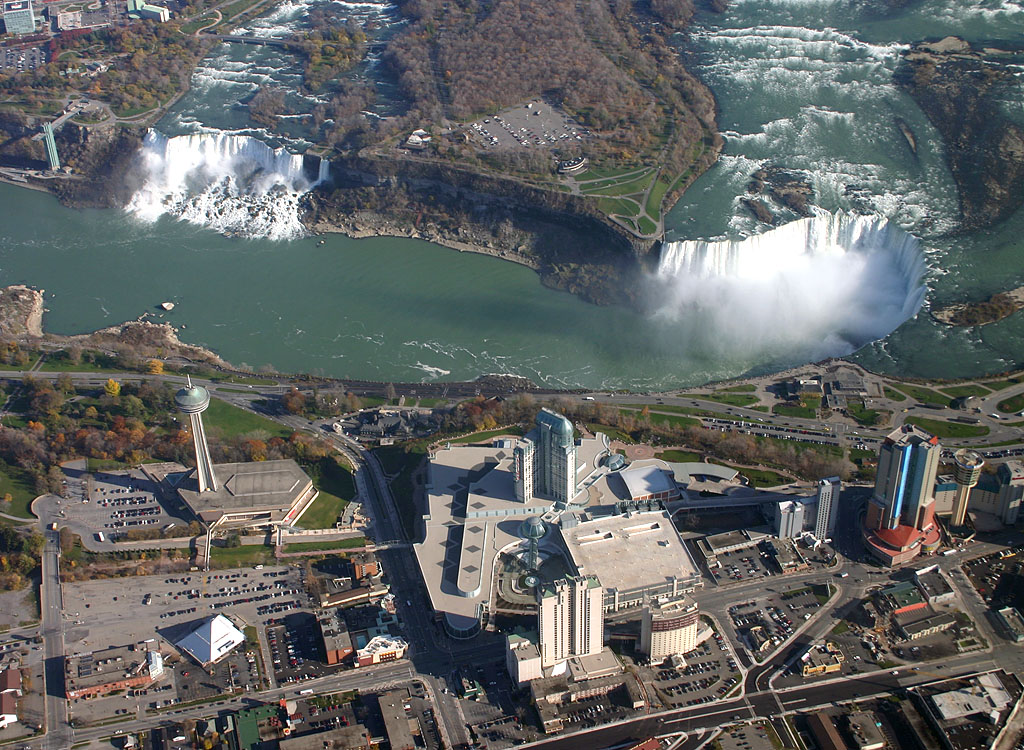
Niagara Falls and the History of Electricity

To see the role of Niagara Falls in electricity, we have to go back to electricity's humble beginnings.
Most of us know that Thomas Edison was credited with the invention of the incandescent light bulb. It was a technological achievement that ultimately changed the way we lived as our activities started to encroach well beyond sunset.
However, did you know that Edison almost undermined the electricity revolution by championing the DC electric current for electricity networks?
DC current (or "direct current" as opposed to AC current or "alternating current") pertains to the flow of electrons directly from the source (like a battery) to the load (like a light bulb). You can kind of think of it like water flowing from a reservoir high up on a hill and streaming downhill in a channel or creek towards a waterwheel, where the force of the moving water turns the wheel and does work for you. If you were to look at a DC current on an oscilloscope (which displays voltage as a function of time), it would be more or less a straight line.

Ever the entrepreneur and inventor, Edison sought to leverage his patents and control the electricity delivery (transmission) to customers needing to light up the night without noxious and staining fumes from gas lamps or candles (see how the power grid for transmission and distribution of electricity works).
However, DC has its drawbacks as it tended to be limited in range as it was susceptible to energy loss (as heat) as it moved across the wires carrying the electricity (wires could be modeled as resistors, which generate what's called Joule heating when current passes through it). Many of the clients who employed DC had to be located within one mile of the DC generators as a result. The voltage was also low voltage since Edison positioned it as "safe" and worry-free from electrocution.
George Westinghouse and Nikola Tesla (who ironically was Edison's secretary) challenged Edison and championed AC current.
AC pertains to the alternating direction of flow of electricity from source to load. Periodically, the current moves in one direction, then flows in the opposite direction. If you were to look at an AC current on an oscilloscope, you would see a sine wave wiggling about zero volts in the vertical middle (i.e. the mean or average).
It turned out that AC had many benefits and it allowed engineers to capitalize on breakthroughs at the time. This included Tesla's induction motor (which exploited Faraday's Law to convert magnetic fields into an AC electrical current - the basis of most generators today) as well as William Stanley's commercial transformer (which allowed the ability to "step-up" or "step-down" AC current - the basis for transmission of electricity over long distances and overcoming line losses) among others.
Edison tried to vilify AC as dangerous. He even encouraged capital punishment to use AC for electric chairs to make the public associate AC with death and thus turn to Edison's "safer" DC.
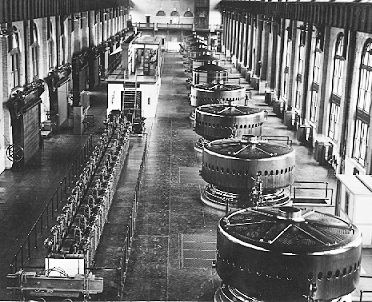
After several years of fighting a public relations, legislative, financial, and technological battles, it turned out that Niagara Falls would play a crucial role in tilting the battle of AC versus DC in favor of AC.
The falls was like the scene for the climax of the epic battle between AC and DC. Both camps saw the powerful waterfall as a means to demonstrate the superiority of one technology over the other. The stage was set for numerous power companies to try to divert water upstream from the falls and route them to turbines which in turn generated the electricity.
Edison's limited range DC meant customers had to be close to the falls to attain the benefits of the DC generators he championed. This is the basis for what's known as distributed generation, where users had to be located close to the source of the power though you could have multiple generators each serving a localized community in a de-centralized network.
Meanwhile, the Tesla/Westinghouse camp were able to directly use the AC generated by the turbines spun by the force of the Niagara River diversions, step up the voltages with a transformer (up to hundreds of thousands of volts), send it long distances (to Buffalo nearly 30 miles away and eventually to Manhattan where there's Broadway and Wall Street), and step down the voltages with a transformer to a more usable form for lights and eventually other inventions to come like machines (for manufacturing), radios, televisions, calculators, etc.

While the hydroelectric schemes at Niagara Falls weren't the first to demonstrate Tesla's generation motors or that it was possible to use hydro for electricity, it was the first of its kind for industrial use.
Thus, the stage was set for the adoption of AC, which eventually paved the way for energy monopolists (like Samuel Insull), federal involvement in regulating (and in many cases enhancing monopolies) of electricity, standardizing the electricity (so you could plug your electronics in one area and it would still work elsewhere in the country; our current American standard is 120V AC oscillating at 60Hz), and the expansion of the electricity grid across the Nation as well as the world.
In essence, the AC current paved the way for centralized generation and consequent distribution and transmission of electricity to customers. Thus, the energy utilities started to gain influence and power, which still remains to this day.
Today, we take for granted that we plug in our electronics to the wall socket and get electricity to power our computers, chargers, TVs, lights, microwaves, refrigerators, etc. Yet it was a waterfall that was instrumental in the eventual adoption of our electricity grid, and thus changed our lives forever.
Now while Edison ultimately lost the technological battle between AC and DC, he might end up getting the last laugh as environmental, political, and economic pressures are steering the electricity industry back towards de-centralized distributed generation (though not totally in favor of low voltage DC as Edison would've liked). This opens the possibility for clean renewable energy (solar, wind, geothermal, wave, etc.) to compete with energy utility monopolies for power generation and distribution (which is currently by coal-fired plants, natural gas, nuclear, and hydroelectric) by being more efficient, environmentally friendly, and cheaper. Whether this happens sooner rather than later largely depends on all the backroom dealings, money exchanges, promises, and debating amongst government and industry interests (this includes lobbyists and politicians taking money from industry) who make the decisions as to how the Nation moves forward on this matter.

Electricity - The Past and The Future

Electricity is a necessary and integral part of our daily lives. It allows us to light our homes and our streets. It keeps us cool in the summer, warm in the winter and allows us to power a wide array of gadgets. Electricity is the force that powers all of our lives.
Even though electricity is so important to us, it still remains somewhat of an enigma. Most of us give little thought to its very presence, let alone contemplate its history or future. Today we are going to rectify that situation by not only giving you the history of this vital force of nature but also by giving you an overview of how electricity is going to change our lives in the very near future.
The History Of Electricity
It is now commonly believed that electrical forces were harnessed by mankind, albeit on a very limited scale, as early as the first century A.D. This belief has been fostered since 1938, when William Konig discovered earthenware objects that were believed to have been used as the first batteries. These artifacts were made of terracotta and contained both a copper cylinder and an iron cylinder inside. It is believed that the ancient people in this area filled these pots with either lemon juice or vinegar, used as a weak electrolyte. This would strip electrons from one metal post and depositing it on the other metal post, thus creating an electric current. Because of this potential for electric current, these artifacts have since been dubbed Baghdad batteries.
Even though the ancients may have had a basic understanding of electrical properties, it wouldn't be until the seventeenth century until scientists really began to investigate the seemingly magical properties of electricity. This is when an English scientists named William Gilbert really began looking into the properties of electricity with a series of experiments that produced static electricity by applying friction to a piece of amber. William Gilbert would go on to coin the word "electricus", a Latin word that means "like amber", and would later evolve into the word electricity.
Research into the properties and applications of electricity would continue at a snail's pace until the nineteenth century when some of the greatest minds in the world began to refine the principles and generation of electricity. Some of the people who helped revolutionize this field included Nikola Tesla, Alexander Graham Bell, Thomas Edison, George Westinghouse and Lord Kelvin. These great minds transformed electricity from a mere intellectual curiosity into the defined scientific principle that it is today, thereby transforming the entire world.


The Future Of Electricity
Having established the long and illustrious history of electricity, let's turn our attention to the future. What new advances can we expect to see in this field? Quite a few, actually. Let's look at what electricity is likely to be transformed into.
Wireless Power
Wouldn't it be nice to power you laptop without having to worry about charging its batteries or running a television somewhere that isn't close to an outlet? Well, that might just be the future of electricity. Researchers at MIT's Department Of Physics has made significant strides in making this a reality by developing something they call "WiTricity." It works by transferring electricity right over the air like Wi-fi. They have already demonstrated their ability to do this by lighting a light bulb that draws its power over the air rather than through an electrical cord.

All Things Electric!!
It is predicted that in the future electricity will take on an even more prominent role in our lives. It will be used to power anything and everything. This includes combs, brushes, shoes and even articles of clothing. These innovative ideas may further increase our dependence on electricity, but it will also open up new possibilities for us. If you don't believe that electricity will play an increased role in our future lives, then all you have to do is look at the electric car. A few years ago these vehicles were pretty rare but they are now becoming more and more common.